Reception
Hello and welcome to our Reception Class!
In our Reception Class (Palm Class) our teacher is Mrs Gordon and she is supported by Ms Ahmed and Ms Morgan
Our curriculum is based on the EYFS framework and supported by the non – statutory guidance Birth to 5 matters.
Our Early Years Principles at Southmead School
At Southmead Primary School, we believe that every child deserves the very best start to their education. Our Early Years provision is guided by the principles of the Early Years Foundation Stage (EYFS).
Our Overarching Principles
Our practice is shaped by four key principles:
 |
Every child is a unique child, who is constantly learning and can be resilient, capable, confident, and self-assured. |
 |
Children learn to be strong and independent through positive relationships.
|
  |
Children learn and develop well in enabling environments with teaching and support from adults, who respond to their individual interests and needs and help them to build their learning over time. Children benefit from a strong partnership between practitioners and parents and/or carers. |
  |
Importance of learning and development. Children develop and learn at different rates. |
Specific Aims and Important Information
The Areas of Learning and Development
The EYFS curriculum is organised into seven areas of learning and development, all of which are interconnected and equally valued.
The Prime Areas
The three prime areas provide the foundations for children’s learning, relationships, and overall development:
- Communication and Language
- Physical Development
- Personal, Social and Emotional Development
The Specific Areas
The four specific areas build upon the prime areas, helping children deepen their understanding, develop key skills, and foster a lifelong love of learning:
- Literacy
- Mathematics
- Understanding the World
- Expressive Arts and Design
Through a carefully balanced curriculum, engaging learning experiences, and high-quality interactions, we inspire children to become curious, creative, and confident learners who are well prepared for the next stage of their education.
Phonics
The children follow the Little Wandle Phonics Scheme. In Autumn they learn phase 2. In the spring they move on to phase 3 and, in the summer, then learn phase 4. Phonics is the strategy we use to teach children how to read and write.
To find out more click on the link to the phonics page on our website. Here you will find useful resources and a link to the Little Wandle parents page.
Maths
In Maths we use NCETM with the support of NumberBlocks. Throughout the year, we will be going deep with our learning and understanding how to count using 1-1 correspondence, how to subitise (recognise a number without counting it) and the composition of a number e.g 5 is made up of 2 and 3 or 4 and 1.
PSED
We use the PATHS scheme (Promoting Alternative Thinking Strategies) at our school. Children learn about different emotions and what they look and feel like. PATHS supports them to develop emotional awareness, self-control and how to problem solve to improve their behaviour. We teach the children how to do the Turtle. This is a strategy where pupils: stop, breath, say the problem and how they feel.
Writing
At the beginning of the year the children learn letter formation and begin to form cvc words. Over the course of the year we learn to write phrases and sentences. We use the Write Stuff scheme. Initially this is used to support pupils vocabulary, oracy skills and by the summer term, pupils are also applying their phonics to their writing using this scheme.
How you can help
In reception we aim to provide an exciting and hands-on curriculum where children are learning through play in our inside and outside areas to further their knowledge and understanding of the world around them.
Throughout the year, we are supporting the children to hear initial sounds in words, e.g. t for tap. We are extending the children who are able to do this to write down the main sounds that they can hear in words.
Here are some of the ways you can help your child at home:
- Reading with your child every day and signing their diaries.
- Practicing writing and recognising your child’s name.
- Practicing counting items to 5 and beyond.
- Letter and Number formation.
Useful links
Number blocks episodes that we teach alongside our maths learning:
https://www.bbc.co.uk/cbeebies/shows/numberblocks
Interactive maths resources:
https://www.didax.com/math/virtual-manipulatives.html
Phonics videos of teachings introducing our phoneme actions and rhymes
https://www.southmeadschool.co.uk/learning/phonics-at-southmead/
Phonics play
Cosmic Kids – mindfulness & yoga
Key Dates
Please click here to access the school calendar
Please click here for information regarding term dates
Please provide a PE kit for your child, which can be kept in their locker and will be sent home in the holidays to wash.
We will have PE on a Wednesday.
Please read with your child as much as possible and have their book and reading record in their bag everyday so we can change the books and read with them.
Their books will be changed every Thursday.

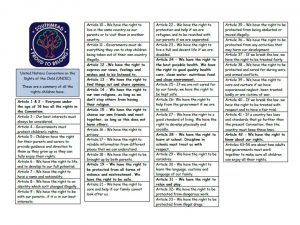
United Nations Convention of the Rights of the Child
If you have any questions please ask the member of staff on the door at the start or end of the day, or get in touch with the school office to arrange an appointment.
We are so excited for the year ahead with our new Reception class!